
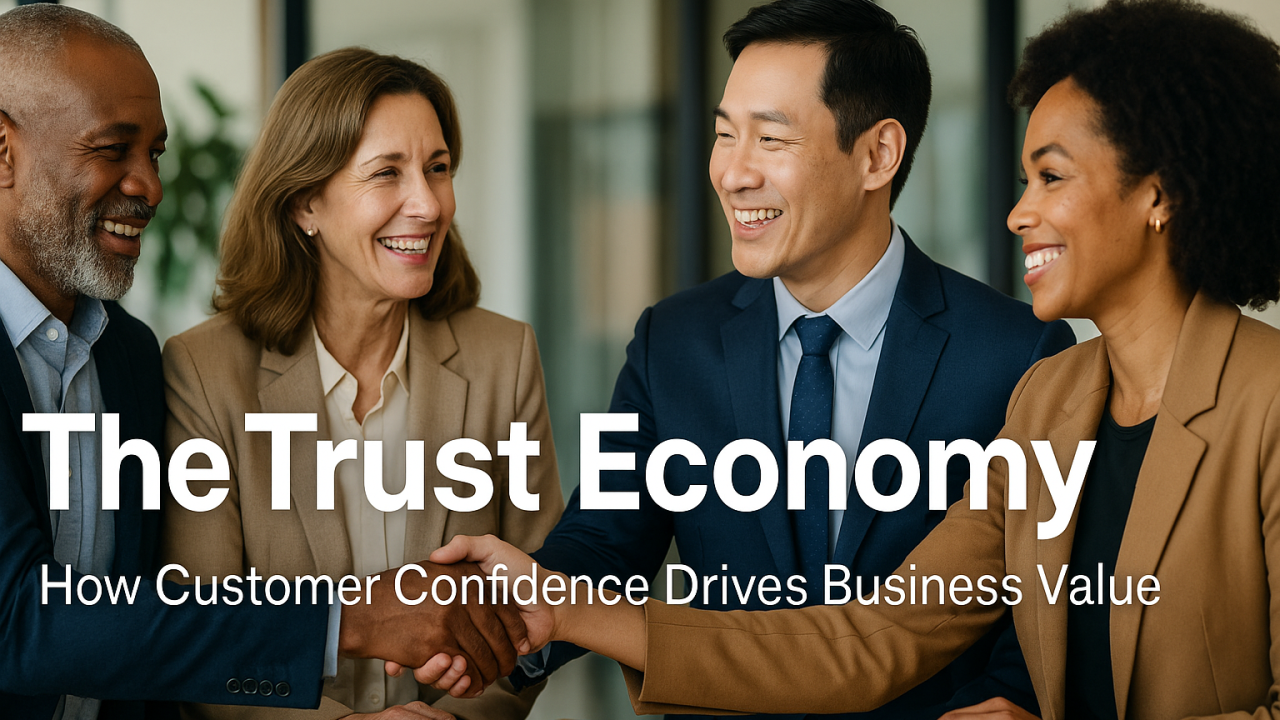
This Executive Impact Series article is a collaboration with Anush Naghshineh and David Turner.
Introduction
We’ve entered an era where trust is the new currency of business, a measurable asset that determines not just who wins customers, but who retains them. Over the past decade, digital acceleration, data proliferation, and social transparency have made information and misinformation everywhere.
As a result, consumers and companies no longer buy products; they buy confidence: confidence that their data is safe, that their partners act ethically, and that their experiences will be consistent, fair, and aligned with their values.
But trust isn’t built through technology; it’s built through people.
Decades of behavioral economics research have confirmed that buyers are more likely to pay a premium to do business with people they know, respect, and trust to act in their best interest. Having been on both the buying and selling sides, I’ve seen many, including myself, pay more not for better features but because of trust in the relationship.
In B2B markets, this premium can exceed 15–20% above the market rate when the relationship is built on proven reliability. In consumer markets, trusted brands enjoy higher repurchase rates, stronger advocacy, and sustained pricing power even during downturns. The organizations leading in the trust economy don’t just communicate reliability; they build it into their systems. They embed transparency, use data responsibly, and deliver consistent results through authentic relationships. Trust has shifted from a soft metric to a hard differentiator, one that grows over time like financial capital and determines who earns permission to expand.
Data Transparency, Security Practices, And Ethical Operations as Business Drivers
As organizations accelerate digital transformation, trust has become one of their most valuable assets and their most fragile currency. Customers and partners now expect complete transparency in how their data is collected, used, and protected. Companies that communicate openly about their data practices and demonstrate accountability when things go wrong build a foundation of confidence that translates directly into market advantage. According to recent research, 83% of consumers are willing to share more data with companies they trust, a powerful insight for businesses pursuing deeper personalization and data-driven strategies.
Leading organizations recognize that security is no longer a back-office function; it is a board-level priority. By aligning cybersecurity governance with enterprise risk and reputation management, they position protection not merely as compliance but as competitive differentiation. When executives treat data stewardship as both a moral responsibility and an operational imperative, security becomes synonymous with brand integrity.
Trust is further reinforced through ethical operations, including how companies deploy AI, treat suppliers, and uphold sustainability commitments.
An ethical lapse can erode credibility faster than any data breach.
As regulatory scrutiny and societal expectations intensify, organizations that consistently demonstrate fairness, transparency, and accountability across both digital and physical domains will earn enduring trust. These companies understand that integrity scales better than marketing and that ethical leadership is not just good governance; it is good business.
Building Trust Through Consistent Delivery and Authentic Communication
Trust is not built through promises; it is earned through consistent performance and transparent communication over time. Customers and partners gain confidence when organizations reliably deliver on commitments, especially under pressure. Each fulfilled promise, resolved issue, and candid explanation adds to a cumulative trust balance that becomes a powerful differentiator in competitive markets.
Consistency signals dependability. When an organization executes predictably, meets expectations, and maintains service quality, it provides the assurance that allows customers to deepen engagement. In many business relationships, reliability often takes precedence over innovation. Dependable delivery becomes a testament to integrity, transforming satisfaction into loyalty and loyalty into advocacy.
Authentic communication sustains trust. The most respected organizations communicate with honesty and empathy, acknowledging setbacks, explaining root causes, and taking visible corrective action. Customers rarely expect perfection, but they demand authenticity. In an increasingly automated world where digital interactions often replace human connection, genuine communication and consistent delivery remain the enduring hallmarks of trust.
Quantifying the Value of Customer Confidence
Trust built with customers is a tangible investment. Research from McKinsey shows that organizations that excel at building digital trust are 1.6 times more likely to achieve annual revenue and profit growth of at least 10%. That growth can increase bottom-line revenue by millions or even billions for large organizations.
When customers trust you, they will spend more on your products and stay loyal to you for longer. In their 2024 Trust Survey, PwC found that nearly half of consumers purchased more from companies they trusted, with 28% willing to pay at a premium. Conversely, they found that 40% of customers walk away from businesses that aren’t protective of their data.
Recent data from Salsify echoes PwC’s findings, showing that 87% of shoppers pay more for products from brands they trust, with 69% citing product quality and brand reputation as the main factors contributing to trust. Additionally, research from Forrester indicates that trust drives customer behaviors that drive revenue, including repeat purchases, preference over competitors, and willingness to try new products from a trusted company.
Given these types of benefits, many companies are investing even more in building trust with consumers and enhancing their brand reputations.
Crisis Recovery: Rebuilding Trust After Setbacks
When bad things do happen, how companies respond has a material impact on their reputation and consumer trust. Research from Boston Consulting Group found that almost 30% of large companies have experienced a significant crisis that damaged their reputation. However, the data showed that companies that demonstrate both resilience and competence during recovery achieve up to 10x the level of trust recovery compared to peers who do not respond well or thoroughly.
When Johnson & Johnson faced the Tylenol crisis in the 1980s, they immediately recalled products. They didn’t make excuses or downplay the situation, and they quickly took action. Their response included introducing industry-first packaging that was both tamper-proof and tamper-evident. And critically, they responded by communicating openly and frequently. Johnson & Johnson’s reaction became a highly influential case study and the model for comprehensive crisis management. Research following the incident showed that customer satisfaction can recover when consumers believe that an apology is genuine.
When a crisis does occur, companies need to immediately acknowledge what went wrong without taking a defensive tone. They need to convey that they understand the impacts and communicate this transparently through multiple channels. Then they need to take tangible actions to prevent recurrence.
A study by the University of Queensland Business School found that organizations trying to cover up failures are perceived as creating a second violation, making recovery massively more difficult (sounds like a movie plot).
The automotive industry’s response to the pandemic-related semiconductor shortage offers another more recent example. Because of the chip shortage, auto production across the industry came to a halt by late 2020. From this, manufacturers found they were losing their customers’ trust due to frustrations over price spikes and long delays. When production resumed, research showed that companies that communicated transparently and set realistic expectations maintained stronger customer relationships and trust than their peers.
Conclusion: Strategic Framework for Building and Maintaining Customer Trust as a Business Asset
The path forward requires treating trust as a managed portfolio, not a marketing slogan. It must be measured, reported, and continuously reinforced across every touchpoint, from data transparency and product reliability to leadership behavior and human connection.
Trust begins with people and scales through systems.
The most successful organizations recognize that technology enables consistency, but it’s relationships that sustain belief. Customers may be drawn in by innovation, but they stay, and often pay more, because of trust in the individuals and teams behind the experience.
A sustainable trust framework rests on five pillars:
- Governance and Accountability – Elevate trust to a board-level KPI, ensuring executive oversight and measurable ownership.
- Transparency by Design – Integrate explainability, disclosure, and ethical standards into every digital and AI decision.
- Consistency of Experience – Align internal execution with external promises; reliability is the foundation of confidence.
- Empathy and Humanization – Empower teams to connect authentically; people buy from people they trust.
- Resilience and Recovery – Treat crises as opportunities to reaffirm values and rebuild confidence through action.
Ultimately, the strongest differentiator in any market isn’t innovation or pricing, it’s credibility. When customers believe in your integrity and intent, they reward it with loyalty, advocacy, and a willingness to pay a premium for the relationship itself.
In the trust economy, confidence is capital, and relationships are the most compounding form of equity you can build.