
This article is written in collaboration with David Turner, Jennie Tsao, and Anush Naghshineh.
Introduction: The growing momentum behind four-day workweek trials
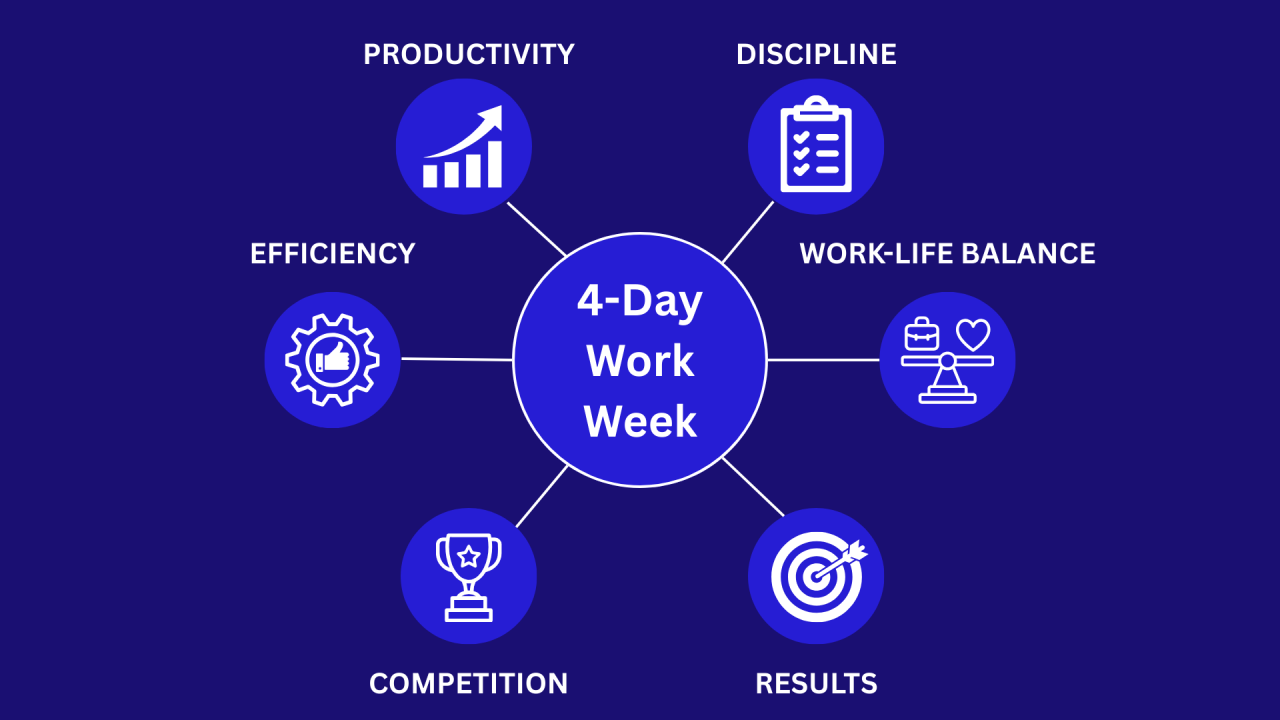
What began as a fringe concept has evolved into a serious business consideration. The four-day workweek is no longer just a perk—it’s becoming a strategic decision for forward-thinking companies.
The results are compelling: Microsoft Japan reported a productivity increase, while 92% of companies in the UK’s largest trial chose to continue the model after completion.
But important questions remain: Does this approach translate across industries? What separates successful implementations from failed experiments? And most importantly, could your organization benefit?
This isn’t about working less. The most successful implementations are about working differently.
The productivity paradox: How less time can lead to more output
Reducing working hours can seem counterintuitive for improving productivity but research and pilot programs suggest otherwise. The “productivity paradox” stems from the idea that constraints force better prioritization. When time is limited, teams eliminate unnecessary meetings, focus on high-value tasks, and streamline workflows.
Studies from Iceland and Japan have shown that a shorter workweek can maintain or even improve productivity, largely due to fewer distractions and improved employee morale.
In August 2019, Microsoft Japan implemented a four-day workweek pilot, giving employees five consecutive Fridays off without reducing pay. The company reported a 40% increase in productivity, measured by sales per employee, compared to the same period the previous year. Additional benefits included a 23% reduction in electricity costs and a 59% decrease in paper printing.
However, this paradox only holds when organizations are intentional in redesigning how work gets done. The magic isn’t in the number of days worked—it’s in the clarity of priorities, empowerment of teams, and removal of inefficiencies.
Real-world results: What companies experimenting with compressed workweeks are learning
Companies that have trialed four-day workweeks often report positive results. In the UK’s largest pilot program involving over 60 companies, 92% said they would continue the model after the trial. Productivity was maintained or improved, with employees noting better work-life balance and overall well-being.
However, not all results are universally positive. Some teams struggled with coordination, especially in client-facing roles or industries requiring 24/7 availability. Leaders also noted that front-loading the week with intense work created fatigue by Thursday, requiring adjustments to pacing and workloads.
Key lessons from these experiments include:
- Success hinges on preparation and clear goals.
- Cross-functional collaboration must be restructured.
- Managers need new skills to manage outcomes, not time.
- Continuous feedback loops are critical during the pilot phase.
Ultimately, these companies show that the four-day workweek is viable if executed strategically and adapted to the company’s specific context.
Implementation challenges: The operational hurdles most leaders overlook
Beyond the headlines of successful four-day workweek trials lies a more nuanced reality. While many companies report maintained or improved productivity alongside better work-life balance and reduced burnout, implementing this model requires substantial organizational transformation.
Sustaining performance in fewer hours demands more than a compressed schedule; it requires full reengineering of workflows, collaboration practices, and support structures. For organizations that operate five to seven days a week, such as those in healthcare, finance, or customer service, compressed workweeks can disrupt client experiences and internal coordination. Support functions like IT, HR, and finance may be unavailable when needed, creating delays and bottlenecks for other teams.
Many make the fundamental mistake of assuming shorter weeks automatically enhance productivity. Successful implementation demands comprehensive workflow reengineering, elimination of low-value activities, adoption of flexible communication, and equitable policies for all staff regardless of location. The four-day workweek isn’t simply about working less. It’s about working differently. Organizations recognizing this distinction can transform potential operational burdens into genuine business advantages.
Making it work: Critical success factors for compressed workweek models
The viability of a four-day workweek rests on some important factors that organizations will need in place before implementation. A carefully developed program is essential, as companies need to ensure employees can maintain, or ideally increase productivity despite reduced hours. This requires a fundamental shift in how work is approached.
Leadership commitment is the first critical component of the program, with managers given proper training to overcome the “out of sight, out of mind” concerns many express when seeing workers less often. Managers have to learn to evaluate performance based on outcomes rather than by office time. If your management teams lack the proper management mindset, these implementations will likely fail.
The second component is technology integration, which plays a vital role. Particularly useful are AI-driven tools that streamline processes and enhance efficiency, supporting the feasibility of maintaining productivity with reduced hours. Companies that successfully implement shorter workweeks often leverage automation to eliminate low-value tasks.
The third component is clear and consistent communication strategies, which are essential for setting expectations and maintaining trust throughout the transition. This includes communicating changes to both employees and external stakeholders like clients. Transparency about why and how the change is happening helps to minimize resistance.
Finally, companies must implement proper measurement systems. The most successful implementations quantify impacts by tracking metrics like productivity, employee wellbeing, turnover rates, and customer satisfaction.
Data from a UK study revealed that 89% of companies that trialed a four-day week continued the practice, with 100% of managers reporting positive organizational impact.
Is it right for your company? A decision framework
Determining whether a four-day workweek is suitable for your organization requires a systematic assessment. Before making this significant change, you will need to conduct a comprehensive evaluation to analyze productivity, resource allocation, and client satisfaction to gauge feasibility. This data-driven foundation is crucial for informed decision-making.
Start by evaluating your business type, employee preferences, and operational requirements. Consider which model might work best: compressed hours (four 10-hour days), reduced hours with full-time status and benefits eligibility, or staggered schedules that provide coverage while giving employees flexibility.
Next, assess industry-specific expectations and limitations. Knowledge-based industries where productivity isn’t directly tied to hours worked typically adapt more easily than roles requiring constant availability. Manufacturing, healthcare, and customer service positions may need creative scheduling solutions to maintain service levels.
Financial implications must also be examined. Implementing a four-day workweek has proven cost-effective for many businesses through reduced overhead costs and decreased absenteeism. However, organizations may face short-term implementation costs.
Finally, conduct a pilot with a defined trial period before a full implementation. This will provide insights needed to refine processes and verify the productivity impacts. A one-month pilot can reveal potential challenges while building organizational support. According to UK research, companies that took this phased approach saw revenue increase by over a third compared to the previous year, with significant reductions in staff turnover.
Is the four-day workweek just a trend? Or a strategic edge hiding in plain sight?
Organizations that successfully implement four-day workweeks aren’t just accommodating employee preferences. They’re redefining productivity itself. By treating time as a strategic asset and rethinking fundamental work processes, they’re unlocking focus and efficiency in ways that create lasting competitive advantage.
The companies willing to pilot, measure, and refine this approach today may well outperform their peers tomorrow – not just in culture but in business results.
In a market where every organization seeks to optimize resources, rethinking the fundamental structure of work might be the boldest – and smartest – move you make.